Thursday, 17 September 2015

Power of Photos


Welcome back to the Randomizer! And to quite an important issue to start us off tying into the main point of this article. Refugees.

It’s been one of the main talking points in the past couple years. People, humans, leaving Syria, Iraq, Afghanistan and various other countries seeking to make better lives for themselves or escape the devastation of war. Yet in the face of it, there have been countries who have tried to stop them coming through entirely, Hungry and Denmark being prime examples. In Great Britain there had been talks about reducing the flow, or ‘swarm’ as David Cameron called them though I’m sure he was talking about his bee-keeping duties then, of refugees attempting to get through from Calais, some even dying in their bid. This is despite our helping saving lives in the Mediterranean in the past.

Yet since the beginning of this month, all of this changed. Cameron has said now 20,000 refugees will be accepted into Britain over the next five years. Germany and Austria opened up its borders to let refugees in their countries, and provide an opening for those who wish to get to Norway, Sweden and Finland. France too will allow 24,000 refugees in over two years. Why all this sudden change? This is where I come to the main point of the article:

The Power of Photos.

On the 2nd September, a three year old Syrian child, called Aylan Kurdi was washed up on the beach in Turkey, drowned in the Aegean Sea on route to Greece. There, Nilufer Demir of Turkey’s Dogan News Agency took a photograph that, for many people, summed up the impact of the risks that they had undertaking to reach new homes, and touched something in people that ask leaders to bring in the refugees. It’s certainly given me something to talk about, not just about the refugees, but a subject that’s really been on my mind for the past week.


Deaths during the refugee crisis have been nothing new to talk about. We have heard how people in Calais have died coming to England in the Channel Tunnel, hit by trucks or cars, and those who had drowned in the Mediterranean. But everything seemed to be encapsulated by this one photo, something that struck our sense of humanity, a drowned child, an innocent victim fleeing his country from war, only to die in the attempt with his mother and older brother, the father surviving and bearing the tears of family loss.
 

That’s something I want to look into today, at how much photos have changed the perspectives of war, show how they can still resonate today in some societies, and how they can capture moments that can invoke our humanity. I’ll be looking at a maximum of three examples that do these things, and see how each of those points reflect ourselves as a whole in those photographs. The first of these photos will be graphic so fair warning to you reading this article, and I do not own these photographs in anyway.


There are those who say that photography isn’t an art. Well then I’ll say ‘Guernica’ by Pablo Picasso isn’t a proper war photo.

----------------------------------------------------------------------------

I shall start with one of the most iconic photos in history, more specifically the Vietnam War.

For nearly 20 years from 1955 to 1975, Vietnam was a virtual battleground for the Cold War, split into two after WW2. North Vietnam was supported by the Soviet Union (Russia), China and other communist supporters. The South supported by USA, Philippines and other capitalist supporters. US presence had increased in the early 60s to stop the communist ideal spreading, but opposition had grown more steadily among students and the growing counter-culture movement to end the war. That opposition broke through quickly with the great number of photographs taken, showing the reality of how the conflict was conducted in a brutal manner. One photo that does that just simply is the (in)famous photograph of execution.


How do you feel looking at that photo? Disgust? Sad? Horror? It’s one of many photos that sent shockwaves through the world, seeing this man kill a Vietnamese innocent in cold blood literally frozen in time. Eddie Adams, who took the photo, won the Pulitzer Prize for this photo, showing the world what the conflict had become, and begin a trend with more provoking photos captured by others to follow suit.

But there is one thing photos can do like many other parts of media. They lie. No, this photograph wasn’t staged in any way, it’s the truth. But it’s not a totally black-and-white picture (No pun intended). That man being shot? He was, as South Vietnamese sources said, a Viet Minh (not Viet Cong) death squad commander, who already killed a South Vietnamese General and his family members that very morning, at the time of a ceasefire. The man with the gun? He was Nguyen Ngoc Loan, another South Vietnamese general whom had apparently witnessed more killings by the man, or had questioned him on the spot briefly, before truthfully killing him on the spot. Adams said years later that the photo told a half-truth, and he expressed remorse for publishing it in the first place saying: “Two people died in that photograph…The General killed the Viet Cong, I killed the general with my camera”. True words, since Loan was disregarded for the rest of his life because of the photo, forced to retire from being a pizza restaurant manager in America after he was found out.

So even with good intentions, this photo is one example of how pictures can manipulate the bigger picture so to speak, a photo being one part of life that can say much, yet interpretation can say more. War has that power to change and affect lives so dramatically, it either damages us or empowers us. In this case and more of other photos it’s both, because it empowers the commander as a victim of war, and in turn empowers those who wish to end the war by using the photo to their own, sometimes misguided, views. Ironic how this photo brings students to protest, about someone who killed and admitted before he was executed he was happy to do so.

------------------------------------------------------------------------------------

The second photo will show how, in some respects, issues still reside in society today, particularly racism, and the USA. I wonder who knows where I’m going.

Racial tensions remain an undercurrent in American society, especially more recently with the number of killings, the most recent in Charleston where nine people died in Emanuel African Methodist Episcopal Church. Martin Luther King Jr, Malcolm X, Barack Obama and many others have affected greatly how the view of black people has changed over the years, and continue to influence how USA views itself, and by extension how the world views USA. Racial tensions reached their zenith in the 60s, as King and X fought for equality in their country against those who, for lack of a better word, wished for black people to remain subservient to whites, some whom I wouldn’t be surprised to hear would laugh at the saying on the Declaration of Independence, ‘All men are created equal’. At the 1968 Olympic Games in Mexico City, Mexico, this photo was taken.


Taken by John Dominis, American track and field runners Tommy Smith and John Carlos (centre and right) raised their fists, known as the ‘Black Power’ salute, as the Star-Spangled Banner played, in protest against racism in USA. Australian Peter Norman supported their protest by wearing a badge of the Olympic Project for Human Rights, as were Smith and Carlos too. Smith has said in interviews that the fist represented equality and human rights, not literally ‘Black Power’ as the political group Black Panthers had done themselves.

Their actions weren’t without consequence of the time. They were booed as they left the podium, and Avery Brundage, President of the International Olympic Committee, deemed it to be a political statement, unfit for the apolitical spirit of the games. After threatening to ban all the USA track team from the games, the US Olympic committee complied to ban both Smith and Carlos from the games. Norman himself was ostracised by Australia for his part in the protest, and refused part and all other male sprinters in the following Olympics.

But this photo is distinctive to me, because despite the work done for equal rights in USA they is still a underlying tension of racism that seems, more to USA then others, unescapable. To the best of my understanding, there remains a discord in different comparisons, such as equal pay, violence and social justice, to name a few. It’s fair to say that though black Americans aren’t supposed to be treated as second-class citizens anymore, it’s undeniably a point that needs to be really looked again because if racial tensions have simply gone into a subtle discord, it’s still racism, and that photo, to me as interpreter, still has powerful significance.

-------------------------------------------------------------------------------------------------------------------

My last photo of the day is perhaps not as famous as the others, but still holds as much significance in today’s world.

During the Arab Spring over 4 years ago where many Arabs protested against various governments in the Middle East, Egypt was one of the biggest forces of change in living memory. Seeing the pictures for myself, I was transfixed by the sight of people protesting in Tahir Square, demonstrating for change in their country. Before the Arab Spring took effect, on New Year’s Day a suicide bombing occurred in Alexandra, killing 23 Coptic Christians. It was said that Muslims were to blame for the attack. Yet on the eve of the Coptic Christmas (6th January), many Muslims came in numbers to protect the Christians in case attacks happened again. A month later, during the protests against the then-government, Nevine Zaki took this photo of Christians protecting Muslims. 


This was a photo that went viral on the internet, spreading fast and showing how two religions can really come together in times of huge change and growing violence. I was quite surprised to find that the Daily Mail had an article about it, and it was actually not that bad. Shock horror!

There never is an easy photo that invokes our humanity so plainly in sight, yet this one sums that up perfectly. Because it’s two different yet similar religions coming together under one banner, to protect each other from attacks, and show that fundamentalism of any religion is really like one man’s beliefs against the majority, if that makes sense. It also shows how in an Islamic country, many people of the main religion are willing to put themselves across to protect their fellow countrymen. In this time where Muslims are persecuted by some people, there is hope for protecting each other against something that can twist and distort, and thus turns us against each other. To quote Mohamed El-Sawy, an Muslim arts tycoon who distributed flyers on that night: “We either live together, or we die together”.

----------------------------------------------------------------------------------------------------

So how do these photos reflect ourselves? There’s so many ways, it’s indescribable.

Photos like the ones I’ve shown can show what we really are in the world, even if there are some that can also manipulate. They give us a sense of how we see the world for what it really can be. It is brutal, symbolic and full of love. But without careful choices also can be interpreted in the wrong manner, like the execution was clearly twisted without understanding the proper meaning. Photography is both a blessing and a curse, that’s its power, used for the realism and manipulation of mankind.

As an art-form I would definitely say it is one, because it has that power to either show the world truly in reality or manipulate the truth even accidently, as opposed to a painting and perhaps interpretation at that. It gives us a sense of understanding and influences/enforces our beliefs to give us the power to fight for what we believe, or if it’s like a casual photo make us laugh.

That’s one view of the Power of Photos. It gives us a sense of who we are and what we see in this world, its ability to change ourselves, and the capabilities are endless…

Wonder if Alice can see her birthday banner from up here?.....damn no signal....Happy Birthday Alice!


-------------------------------------------------------------------------------
That’s it for this month, and I apologise for not making too many jokes in this article. When I got caught up looking into this events, I do take in the serious side of things a bit more. See you in October!

Thursday, 6 August 2015

Problems with Marvel? NEVER!


Welcome back to the Randomizer!

Only a week gone, and I’m already uploading another one. Aren’t I fast? Actually this is due to having a particular event coming up at the end of August: My brother’s wedding. So I thought it might be a lot easier doing this now, then having to worry about not having a chance to upload or finish when that time came. Especially with having to sort out a lot of things in the week of the wedding I assume. So yes, that’s pretty much it in a nutshell…..and I’ll be wearing a suit. While also being the ring-bearer. Not the best move there, especially with a fan of the Lord of the Rings films.

Anyway, there’s something that has been bugging me for a little while: the Marvel Cinematic Universe Franchise.

We are the Masters of the Universe


This is the absolute juggernaut of films franchises at the moment, and no-one can deny it, or for lack of a better word WILL deny it. Since the release of Iron Man in 2008, few could have seen that the MCU would gross close to 9 Billion at the box office only 7 years later, and continue to have a stew of popular films and bad under its belt. I have heard that this is the Golden Age of Comic Book films, and while I’m inclined to agree with that remark, I’d be more willing to say this is the ‘Age of Marvel’. Apologies for the pun, but it’s more or less true. Marvel is the Emperor at the moment. It might take a lot of lightsabers and good use of ‘The Force’ to bring it down.

Like any other films though, the MCU films are always subject to criticism, which is what I’m going to look at today. They can be huge glaring things, like writing and studio issues to the final definitive version of the film/s, to little things that include not seeing full-on crossovers between character’s films, which some fans have been pretty annoyed about. I would be lying if I said I didn’t see those problems, because they are justifiable issues with the films and I sometimes have felt that I have wasted time seeing these films, despite the point that I do like a good number of them. It’s going to be worth considering in future, about 20 years from now or longer, how we view these films? Are they still going to be stupidly fun and entertaining as they are now? Or NOT as stupidly fun and entertaining?

Let’s get started into seeing the justifiable problems with the MCU. I’ll try to keep this one shorter then my ‘Marvel vs DC’ article from last year. To be honest, it wasn’t just the length of it that might have been a problem, but also it felt so obvious that everyone who had seen those TV shows and films, that I think it kind of fell flat on its face. I digress, but also I don’t want to bore you all!

--------------------------------------------------------------------------------------------------------------------------------------

Here are three of the main points I will go over:

·         Villains of…meh
·         Phase 2: Stand-Alone Complex?
·         No crossovers

--------------------------------------------------------------------------------------------------------------------------------------
·         Villains of….meh

One of the bigger contention points in the Marvel Films generally is the villains. Many fans have ridiculed the films for having not very engaging and, forgiving another pun here, comically bad, myself included. It’s been a big gripe against the franchise since it started, and it has really continued to this day.

What they get up to in their spare time


I had first properly noticed this in the first Iron Man, the villain in question being Obadiah Stane (played by Jeff Bridges). Despite the part being well-acted and coming across as gleefully political in one way, there wasn’t a properly explained coherent reason of motivation. In fact, I’m going to use that quite often: Reason of Motivation. ROM. Yes, Stane was an interesting villain, but there’s not enough to make him so memorable, or not shown on film so that we have an understanding as to why he is the way he is.

This is a trend that had continued in the Iron Man sequels, with the villains Ivan Vanko (probably the worst villain in the series overall) aka Iron Monger Version 2 and Aldrich Killian aka totally The Mandarin who were interesting to a point, but not enough to particularly make them seem very threatening, more so with Vanko who got pretty much owned twice in the same film. Killian was pretty interesting and a bit clever, but still not enough to warrant interesting, and no I’m not going into the Mandarin debacle as many people will most likely see it.

What Mandarin debacle? It was just filming Ben Kingsley inside his house


In great fairness, there hasn’t really been a great powerful threat to any of the Marvel Superheroes in any way shape or form, one that demands our attention and gives us the ROM to think ‘oh crap, this is someone we need to look out for’. Example: Thanos. He is going to be the main threat in Avengers: Infinity Wars double when they come in 2018/19, yet on reflection he is a boring villain. Really think about it, he was introduced as someone to be wary of in Avengers Assemble, courting chaos in his wake as he collects the Infinity Stones…yet he’s not that much of an interesting person. He’s been shown three times in small cameos since, and what do we really know of him? Bugger all, yet he’s the overriding villain of the whole Marvel series. Give us some idea of what he’s capable of, please?

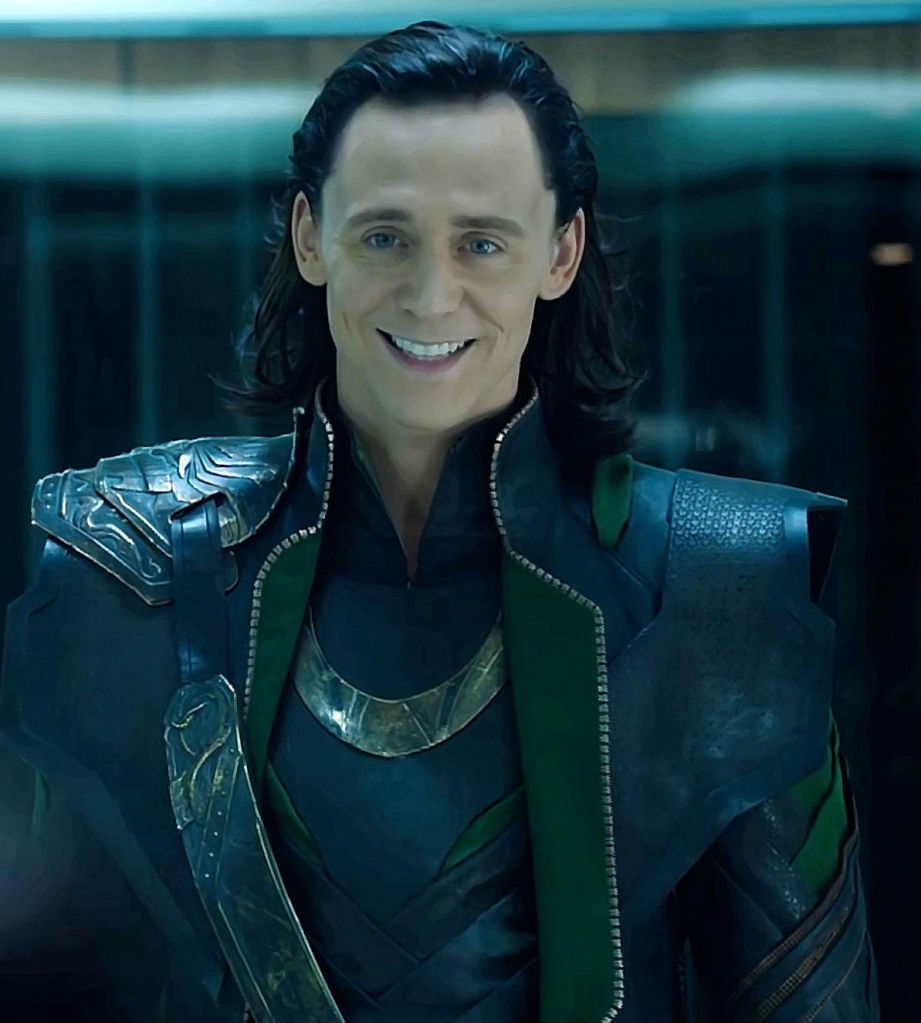
The only real interesting villain in the entire series is Loki, played to great perfection by Tom Hiddleston. He’s a complex character, more so in the first Thor film because of his determination to prove himself worthy to Odin, even after finding out that he isn’t really his son to begin with, and be on equal terms with Thor. Becoming more of a straight villain in The Avengers and back to being complex in Thor: The Dark World, he is certainly one to keep an eye on, even if his motivations might be a little skewered. In fact, I would be damn more satisfied if Loki was the one with the Infinity Stones and gauntlet in the end, instead of Thanos. It would make sense in the long run of things.

A man can dream...


So I do have to admit, the villains are pretty poor and not as well developed as some of the heroes are. They’re evil for the sake of evil, just a wall obstacle that the hero can break down easily without as much breaking a sweat. The problem here is while the films are entertaining, they can lack a deal of substance, especially with the villains. If the villain isn’t challenging enough to our comic book heroes, the films will feel less fun and more bland. Speaking of bland…

------------------------------------------------------------------------------------------------------------------------------------

·         Phase 2 of MCU

Now for the record, I do like some of the Phase 2 films Marvel has released. I saw Ant-Man at the cinema just last week and absolutely loved it. Saw Guardians of the Galaxy twice, thought it was awesome despite Ronan the Accuser being a fan of the song I’m Blue (Da Ba Dee) for no reason, and enjoyed Captain America: The Winter Soldier as one of the best sequels to a Marvel, at least until probably Guardians 2 comes out in a couple years. BUT…I do kind of feel that the films aren’t as very well connected as they could have been, for plenty of reasons.

First, there’s not really much of over-riding story-arc in the phrase, considering most of the films are pretty much stand-alone for each of the main Avenger characters. I’d be lying too if I said I didn’t understand why each Avenger needs their films. It’s perfectly fine to explore each character going through different problems in their own lives, and have them grow in their own unique ways before coming together in the next Avengers film. But the way they’re written in the films is not great. Thor, Captain America and Tony Stark just don’t really develop that much, they pretty much stay the same all throughout their films and don’t grow. Only Guardians has any kind of good development, despite how little it may be. What did each of the characters learn from their experience? Tony’s house blew up, Thor gets Jane Foster (barring not much chemistry the two have to start with), and Captain America is still a goody two-shoes. Yay?

That's what happens when you make Iron Man 2


Another example in the connection is the irrelevancy of each film. I had first thought about that when watching Avengers: Age of Ultron, and being quite bemused at how Ultron was played, and how interesting, but boring he was at the same time. The feeling that he was just another villain just going to be killed off at the end felt like many of the Phase 2 films, that nothing the villains did really mattered to the heroes. If you really think about it, how much tension did you really get from the films? I’ll admit I definitely had some in my head when watching the films, but not enough to feel, ‘what the f***?’.

Let me compare this to Phase 1 for a moment. It made sense for Iron Man, Thor, Captain America and The Hulk to have their own respective films to introduce them, so that you see their stories first and understand what they’re going through before bringing them together, to fight Loki who appears in the first ‘Thor’ and gains some power to take over the Earth, prompting Iron Man, Thor, and Captain America working under the agency SHEILD to come together. That all makes sense. It does not in Phase 2, because the way they’re connected is just lacking, badly.

Not enough Loki, that's why.


Each film, while being somewhat entertaining in their own right, felt irrelevant in the grand scheme of things. They didn’t serve much of a purpose to build up what resulted in a waste of a team-up, Age of Ultron, fun and enjoyable as that was. Perhaps if the idea of Ultron was introduced in Iron Man 3, or the idea of the Aether in ‘Thor: The Dark World’ was an Infinity Stone, it might have made for a stronger story arc, and even give off some interesting satire at that, as well as introducing the grander scheme of the Infinity Stones would have been good if written in properly. As it is, it’s ok, but could have been much more than that. Speaking of Phase 2…

--------------------------------------------------------------------------------------------------------------------------------------

·         Crossovers

I’m sure that it’s escaped no one’s notice that with the amount of characters available in the MCU, surely there will be some kind of crossover in the films involving many characters that ISN’T the Avengers. Well Marvel’s line on that appears to be: “Yeaaaaaaa, not gonna happen. Lol”. That’s probably their line to anything that people would disagree with. Not Alice Beadle, never. Love you Alice!

I don't usually make crossovers into Marvel articles...but when I do, it's because Alice asks to sort you out.


Anyway, I can take a guess at why these crossovers with all the different characters don’t happen, it goes back to the Phase 2 films being stand-alone for each character, and seeing their story unfold (albeit not well). If that’s the case, fine. There really is no problem with that, but wouldn’t it make more sense to have different characters appearing to help everyone out in some way?

It would make for some interesting banter between whoever comes to help and the main character, and make for developing teamwork to show off various new equipment and abilities, regardless of budget in production and more writing to do. They had three films evolving around on Earth (Guardians not really counting) before Age of Ultron, wouldn’t it have helped to create an interesting dynamic among these characters at least?

Let’s use Iron Man 3 as an example. The ending involves Tony Stark, Rhodie and the various Iron Man armours against Aldrich Killian and his ‘Extremis’ soldiers. If Captain America or many SHEILD agents were to be involved in the final battle, wouldn’t that have helped to not just show that these people can help each other, but create some tension as well among characters? In fact, that could have been a starting point for what happens in Age of Ultron, carrying on through to Thor: The Dark World when London’s attacked and in The Winter Soldier to help Nick Fury take down SHEILD from the inside. Come on Marvel, you might be ahead of the game in comic book movies, but a bit more thought in the films might make them more credible.

If arguing over Jon Snow's death doesn't make for compelling drama, I don't know what will


So really, in the long run of things, crossovers would help to serve a purpose in the Marvel Universe. It would create better character development amongst the heroes, give some more insight into how they can relate to one another, and give a better arc to work with, especially in Phase 2. It’s sad to think this just won’t happen in the MCU, not even in Phase 3…much, I think Captain America: Civil War will be the exception, but it is long overdue. Whether any of the others will get the same treatment before Avengers: Infinity Wars double, I don’t know, and don’t think it will happen.

-----------------------------------------------------------------------------------------------------------------------------------

That’s my three main criticisms for the series overall for the moment. There are definitely some missed opportunities in the MCU regarding a few problems with the villains, crossovers and the films themselves, especially with Phase 2. I won’t go into detail about plot holes or otherwise, because there’s a lot of them to get through, and I do feel it would be a load to get through and overblowing the point of this article. But I do feel that if Marvel Studios have the time to develop characters and cross-overs properly, these films may just be better well-received and actually may have some underlining commentary.

As they are now, I will illiterate my point that I don’t hate these films, far from it. Apart from Iron Man 2. Urgh. I think they’re a fun entertaining series of films to watch, with some of the issues being quite glaring at times. These are films that aren’t really supposed to be taken SO seriously, even though one has written an article complaining about them as such. Logic! But to a point, wouldn’t it help at have at least a modicum of intelligence in these movies? They are comic book movies, but having a degree of intelligence might help in the long run, and make them more memorable.

Or throw Deadpool into the next Avengers film. Either way would be sweet. (See the trailer it's good!)


-----------------------------------------------------------------------------------------------------------------------------

That’s it for August, in quick time. I will return back to the back-end of September, so until then…Randomizer out!